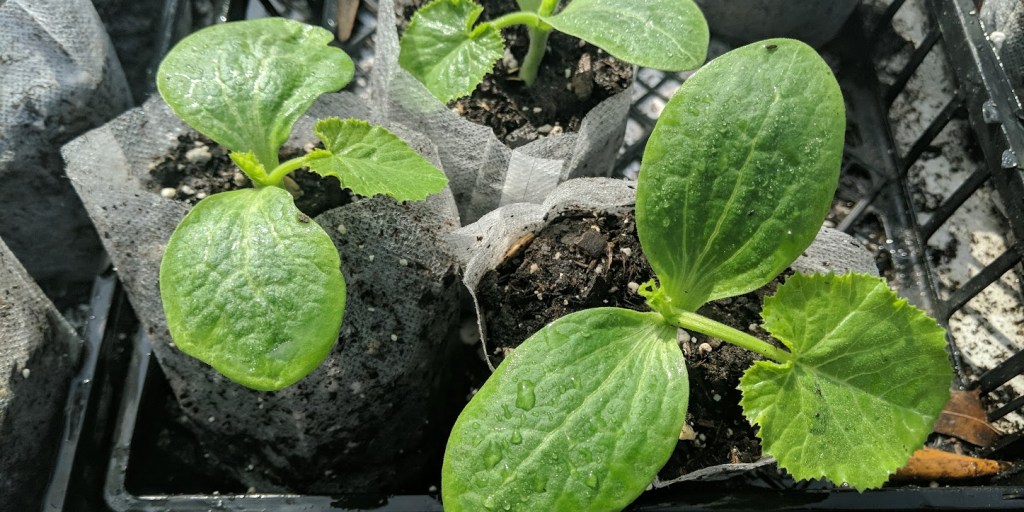
See the difference between the two sets of leaves attached to the same plant? This is actually a completely normal occurrence and happens with seedlings. The first set of leaves that appear after germination are called seed leaves and are actually part of the original seed you planted. These will eventually fall off but before they do, they are responsible for storing up all the nutrients to feed the plant until the second set of leaves fully emerge.
Once the second set of leaves unfurl, they will begin the process of photosynthesis which then provides the plant with the nutrients needed to fully mature and eventually provide food. These secondary leaves are actually referred to as “True Leaves” and you may find these words used as a description on seed packets as to when a plant is ready for transplanting.
There is a time difference between the seed leaves and the true leaves of about one to three weeks. Now some varieties of peas will actually sprout its seed leaves just underneath the soil which can make things interesting, but patience will pay off in the long run.
After both of the true leaves have sprouted, this is a signal for you to start thinning out the seedlings and deciding which ones look healthier and stronger than the others. Do not be afraid to discard a seedling if it already looks like it’s struggling. In nature, there is not empathy for a plant that won’t fulfill its purpose and you won’t do yourself any favors having to baby a plant that just isn’t strong enough to survive on its own.
If you don’t start thinning seedlings after true leaves have set, the root system will start to gnarl itself into a tangled web and you will have terrible difficulties trying to undo them without traumatizing or killing the seedling. You can lightly fertilize seedlings after the first set of true leaves, and I wouldn’t recommend using worm compost so it’s not likely to cause harm.
When your seedling puts on its second set of true leaves you can transplant it into the ground or a pot. It’s recommended for tomatoes, eggplants and peppers to be moved into a pot so that the rooting system is thoroughly established before in ground transplanting. Due to their fast growth, melons, cucumbers, gourds, squash, pumpkins and luffa’s can be transplanted directly into the ground after their seed leaves emerge. Though, I would cover with a white cold cover until the roots have had time to establish themselves and have it become strong enough to battle any bug infestations.
Before I forget, if you see a downy covering on your seed leaves, this is likely a part of the germination process and shouldn’t cause any issues.
Happy Homesteading!
 Suburban & Rural Homesteading Today