Frequently, individuals move to Florida with the assumption that out winters are mild and almost nonexistent because we are the “sunny state”. In reality, we see temperatures in North and Central Florida drop down into the 20’s every single winter season. Now it’s not winters like say Colorado or Montana have, but we have enough of a drop that people will frequently run around like a lunatic trying to cover every plant possible even if they are cold tolerant. Don’t be that guy! Please educate yourself before you waste your money buying plant varieties that will not survive Florida’s scorching hot and humid summer, or it’s frigid winter temperatures.
I’ve done my best to compile a list of edible and pollinator attracting plants that can survive our weather and bounce back. You’ll see a (P) for pollinator, (E) for edible, (M) for medicine, or (H) for household to indicate it’s use specifically within the food forest. As always, please educate yourself thoroughly before handing any part of a plant as some have both edible and poisonous parts.
Remember, if you get a plant from a store that’s labeled as “Tropical” or even “Exotic”, you can almost guarantee that you are either going to lose the plant or you will have to baby it and bring it inside before the temps drop. I know this because I had once purchased a tropical hibiscus and it was a glorious beauty when blooming. However, once the weather turned to our dry intense heat of summer and then the low drops into the 20’s during winter, it couldn’t tolerate it and died. The Florida natives and the woody perennials did die back but popped back once the temps started leveling out and warming up.
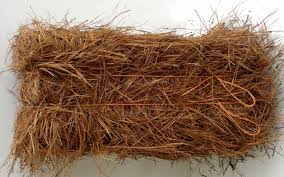
My best advice to give you is prior to the weather dropping below 32 degrees, go to your local hardware store and purchase some bales of pine needles. Grab yourself a huge roll of twine to create a big “belly” of pine needles around the base of your plant. This isn’t the mulch that you typically do sheet mulching with, but the purpose of the pine needles is to protect the plant while allowing air flow. You can rake up oak leaves and mix some of those in there, but pine needles work great.
Please do not go purchase the rectangular bales of hay due to the reality that right now people are losing thousands of dollars due to it being treated with Grazon. Dozens of farmers and small-time gardeners have been hit with Grazon contamination and once it’s on your property, you have to remove every bit of it because it lasts upwards of 3 years. As an additional niblet, it’s being found in commercially produced cow manure and products made with cow manure.
Once you get all of your pine needle bellies around anything with a soft bark, you want to give it a heavy drink before severe drop in temperatures happen. You can run drip hoses but if there is no sun to warm up the ground and it’s not covered thoroughly, it will freeze and could pop the water hoses, so mulch it over or hand water the plants well.
I’m not going to recommend specific varieties of each plant due to the fact that we have almost 8 different growing zones (both A & B adds more zones) within the state of Florida. If you look across the map of the United States, you aren’t going to find too many states with such differences as we have. So, start asking your neighbors and friends where they get their plants from or do a search online to find local nurseries. If you are in North or Central Florida, feel free to contact me and I’ll pass along some of my contacts information to you.
- Yarrow (M/P)
- Camellia (P)
- Persimmon (E)
- Bottlebrush Tree (P)
- Blackberry (E)
- Mulberries (E)
- Vitex (P)
- Soapnut Berry (H)
- Apple Tree [Anna/Golden Dorsett] (E)
- Bananas (E)
- Loquat Trees (E)
- Fig Tree (E)
- Barbados Cherry (E)
- Beautyberry Bush (E)
- Blueberry (E)
- Olive Tree (E)
- Chestnut Tree (E)
- Pecan (E)
- Turks Cap Mallow (E/P)
- Firebush (M/P)
- Citrus (E/H)
- Pineapple Guava (E)
- Canna Lilly (P)
- Strawberry Guava (E)
- Grape Vine (E/H)
- Lemongrass (M/E)
- Ginger (E/M)
- Sweet Almond & Lemon Verbena (P)
- Sugar Cane (E)
- Pear Tree (E)
- Milkweed (P)
- Peach Tree (E)
- Plum Tree (E)
- Comfrey (M/H)
- Elderberry (M)
- French Tarragon (E)
- Goldenseal (M)
- Avocado Trees (E)
- Yaupon Holly (E)
- Maypop Vine (E/P)
- Rosemary (E/M)
- Edible Taro (E)
- Banana (E)
Contact me if you need a guide to help you start knocking down your homestead to-do’s. Happy homesteading!!
 Suburban & Rural Homesteading Today