On any given day I’ll see a post by someone who is innocently asking about a plant or insect and if it’s a plant or insect that’s been deemed invasive, they’re encouraged to take on the responsibility of killing it. You’ll find that there is absolutely no shortage of purple haired gremlins that have nothing else to do but make absolute sure that you do your duty and kill a living thing. Sadly, I’ve noticed that their reply tends to say something to the effects of, “I’m a master gardener and that is 100% “xyz” plant/creature, and you should kill it with this method.” A shepherd of the earth seeks to figure out where there is an imbalance and repair it in some fashion.
Whenever you ask a bunch of strangers online to help identify a creature/plant (which is very common), you get a multitude of answers and a whole lot of arguing. If a person isn’t scientifically trained in the identification of invasive plants, animals or insects, it could be detrimental to native Florida species. Not every single toad is a cane or Cuban and nor is every green lizard a young iguana.
Numerous blue haired gremlins will screech about how Mimosa Tree is invasive, drips sticky liquid and spreads seed pods everywhere. The Mimosa is a wonderful tree for chop and drop mulching, a nitrogen fixing tree, food source for butterflies, an ingredient in burn and wound care, provides shade and is visually striking in your food forest.
There are other plants within Florida that have been listed as invasive that have multiple uses as well, such as the Brazillian Pepper Tree, Air Potato Vine, Autumn Olive and Surinam Cherry. The government operates under the mentality that if something is excessively growing, it’s therefore a nuisance and must be destroyed. While I agree that there are obviously some plants that must be carefully removed due to their toxicity, an average gardener is not usually trained to remove dangerous plants or creatures.
I believe a possible solution is to create a job opportunity for any individual who would be willing to go through an extensive training program to remove these invasive plants or creatures. Both the state of Florida and colleges around the state could assist in the creation of training material and financially fund this career. What I’m against is the expectation that it’s every Florida homeowner’s job to go about identifying invasive species, contacting the proper channels to verify the species and go about killing it if it’s identified as invasive.
While governments may want to appear as being the eco-conscious saviors of the world, if you do enough investigating you find that in at least a few cases it’s was the government itself who caused the problem in the first place. When the government creates the problem and expects you to rectify their screw up, you might want to start looking at the rest of their belief systems.
The species known as the Muscovy Duck was released into parks by the U.S. government for its visually striking features but quickly became a real nuisance due to the amount of feces it produces and the extensive landscaping damage it has caused. How can we work with nature and clean up this terrible governmental decision? My suggestion would be to offer up the opportunity to trap or hunt Muscovy Ducks for free as a meat option for hunters. This reduces the environmental impact, provides a food source for local hunters and begins to restore the ecological balance that was damaged.
In Florida we have a species known as Wild Boar and it was introduced courtesy of the Spanish back in the 1500’s and we now have a program that allows you to freely hunt them throughout the year without a license. The wild boar is extremely aggressive, caused thousands of dollars in environmental damage, destroys entire food crops, and will attack a whole variety of species within its territory. Thankfully, we are making some headway in reducing their numbers while filling many freezers with protein.
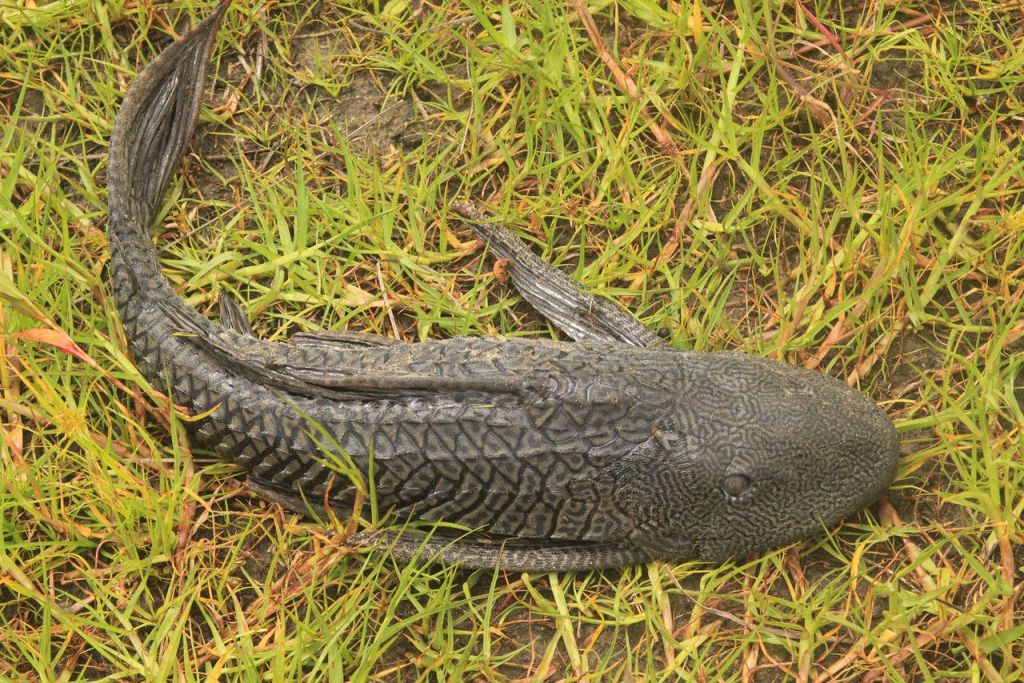
There is currently a slow food movement to help reduce the populations of iguana, walking catfish and lionfish by involving the local divers, fisherman and chefs that will see new food options brought to menus in central and southern Florida. That is how you reduce invasive populations! Find an entrepreneurial opportunity to benefit the community and local supply. As a society, we have to see that there are answers out there already to the issues that we face.
Today we see a slew of marketing to us that try to convince us to eat meat alternatives, whether it’s a genetically modified soy product or something made from insects. We really don’t have to concern ourselves with food shortages if the governmental agencies across the U.S. would get out of the way of those who have discovered better options. We have a smorgasbord of meat-based protein options from the sea, sky and land that keep us from having to resort to such alternatives as insects and gmo corn and soy.
On my property, the darker colored lizards are known to be invasive and are certainly more aggressive while the green are the shy native Florida lizards. In my walks about the property, I’ve taken notice that the green native lizards will blend into any green plant they can find to hide and the darker ones will find a place amongst the decaying plant life or brown mulch to hide. Both of these species have natural predators; it isn’t just each other they have to worry about. If a living being doesn’t adapt to survive, nature will cull the weak and attempt to restore a balance by allowing the strongest to procreate and push onward.
Despite the fear tactics, it’s my belief that you will find more imbalances in urban and suburban locations than you will in the rural woodland countryside. Do as much research as you can, and try to keep a natural sort of balance to the environment that is your yard. If you have an abundance of poison ivy, what you really have is an imbalance that requires the assistance of a lovely flock of goats or hogs. If you have an abundance of snails or slugs, then you have a duck deficiency. Always look for the option that lets you use your shepherding skills wisely and prevent further damage.
Going forward, we must see ourselves as shepherds and choose the option that benefits more than just the now, but that which benefits our children and grandchildren. The future of humanity depends on the choices that we make now.
 Suburban & Rural Homesteading Today