When my husband and I set out to discuss what we were looking for in a recreational vehicle, one of the things that we came face-to-face with was whether or not we wanted to be able to do what’s called “boondocking”. Boondocking is a term that basically means camping in some form without sewer, running water or electricity. It’s not a form of camping that people tend to lean towards, especially women. While Boondocking does come with a requirement that you plan ahead, it allows you to be free to roam to more wild and untamed areas.
My husband and I both did some pretty in-depth research to find out which fancy model of composting toilet we were going to spend our hard earned money on for future travels. After watching what feels like hundreds of videos on various composting models, we both came to the realization that we didn’t really want to spend between $1,000 – $1,500. While there are numerous videos out there that tout the latest model as the best thing ever, we found that there were as much as or more videos that focused on the cons with those very same models. For example, one model boasted of having a handy dandy crank that allowed you to turn a handle which mixed your poop/pee to better help with breaking it down. We discovered that that very model was hated by numerous individuals due to the fact that fecal matter would get caked on the crank inside and have to be cleaned which proved a rather disgusting task. Not to mention the awful odor of both fecal matter and urine mixing together.
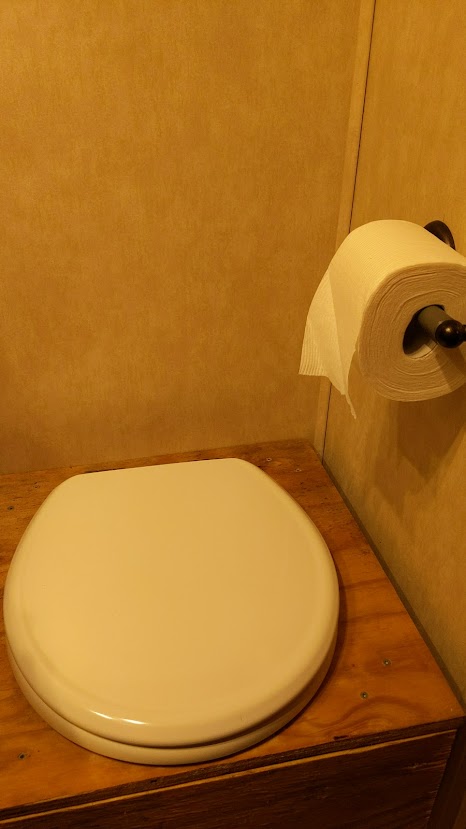
We finally decided that the best model for our family would be one that my husband and middle kiddo would put together. You can purchase the same kit we have here if you would like to make one for your families recreational vehicle. In addition to the kit, you will need a 5 gallon bucket, biodegradable trash bags, toilet seat, a huge bag of peat moss, plywood, screws and anything else the instructions tell you to purchase. While the seller may not outright suggest this, I would personally recommend you purchase two dollar store spray bottles, white vinegar, disposable gloves, rubbing alcohol and antibacterial wipes.
As a family of 5, we empty our composting toilet approximately every 2-3 days on average. Since the urine diverter allows urine to flow into our black tank, we empty that on a daily basis because our grey tank gets emptied at the same time, whether it’s completely full or not. If you choose to build your own composting toilet, you will need to decide what modifications you want to make clean up easier. For us, the toilet seat is attached to the plywood “lid and the urine diverter is attached with a “U” clamp.
How do we empty our composting toilet?
(1) Put on disposable gloves. No matter how careful you are not to get poop or urine on you, you want to take extra precautions to prevent any possible illness.
(2) Take out a biodegradable composting bag and your antibacterial wipes. You can pick up the bags at home depot or even Amazon.
(3) Remove the entire lid section, exposing the 5 gallon bucket underneath. Carefully, lay the lid to one side remembering which direction (L or R) you turned the lid to remove it. It’s important that when you replace the lid later, you don’t get a kink in the diverter hosing.
(4) Reach into the bucket and tie the trash bag tightly closed, being careful not to get any fecal matter or fluids on your gloves. Lift up the whole bucket and take it outside.
(5) Depending on where you are boondocking, you will need to dispose of waste in whatever way is legally acceptable if you are at a federal park or privately owned RV park. Do your research and decide on what you wouldn’t consider embarrassing as far as disposal goes. If you are boondocking on your own private property or family owned private property, simply dig a hole in the ground, place the biodegradable bag into it and cover it thoroughly.
(6) Spray the inside of the bucket down thoroughly with rubbing alcohol. Give it a few moments to go to work, then pour excess liquid on ground or in trash can.
(7) Place a new bag inside the bucket and carefully reassemble the bucket and lid together. Make sure there is firm contact between the lid and bucket so it’s nice and stable for the first use after cleaning.
(8) Take two antibacterial wipes and wipe down the entire toilet seat. If you would prefer a more “natural” product, you can use the rubbing alcohol spray and a paper towel to wipe it down. Dispose in your bathroom trash can.
(9) Spray the inside of the urine diverter with simple white vinegar to keep the smell down.
(10) Dispose of your gloves in the trash and scrub hands thoroughly with soap and water.
To help reduce the chances of sickness, be sure to designate one or two individuals who are old enough to carry out the task of dealing with the toilet. Ideally, the person that deals with the preparation of food should NOT be handling the task of emptying the toilet.
If you have littles under the age of 12 years old, I would highly recommend you reconsider using a composting toilet unless it’s your only option for your first recreational vehicle. Children are prone to getting diarrhea and vomiting from childhood viruses, and it can be an enormous additional task to deal with multiple sick littles while having to frequently take out a composting toilet. Personally, I have a 16 and 14 year old that we have trained to safely and properly empty the composting bucket. My 12 year old kiddo isn’t physically capable of the task her older brothers can take on, so she has a few more years until she might be ready.
Oh, and while we were willing to foot the $1,000+ price tag for the fancy composting toilet models, the plywood one my husband and son put together only cost us around $200 total. Believe me when I say that there are numerous products that you will need to purchase for your recreational vehicle, so it’s nice that we were able to save $800 to spend somewhere else.
While you may feel the task of researching a flushing toilet versus composting toilet might be tedious, it’s a task that requires a lot of planning and forethought due to the financial differences and our current economical climate. Before making an RV purchase, be sure to discuss the possibilities with the other members who will be sharing the toileting responsibilities.
** As always, some of the Amazon links to products on my website allow me to have a portion of income from the sales of these items which helps my family financially. **
If you have any questions about using a composting toilet feel free to shoot me over an email at suburbanhomesteadingtoday@gmail.com ^_^
 Suburban & Rural Homesteading Today