We in Florida will see all four seasons and one of the best products to have in your garden best is organic mulch. Organic mulch is something that at one time was alive but now is being used to cover and protect your plants. Organic mulch typically is made from chipped branches and trees but can also consist of herbicide free hay, pine needles and even fallen leaves.
Currently, there are inorganic mulches made from a variety of products that ideally should NOT come in contact with your food plants. The most common inorganic mulch is made from ground up pieces of old tires that is then heavily dyed a variety of colors. Gravel, polished stones, and even plastic have been used as a base for making mulch products. In some cases, gravel and polished stone will settle down into the soil which will eventually expose the soil underneath. These two products have a tendency to not only absorb heat, but hold it and can heat up the plants and damage them during the summer. I’m of the belief that eventually we will come to find out that the tire and plastic mulches leech chemicals into the ground.
A mulches job is to provide a blanket between the weather surrounding the plant and the tender roots under ground. During cold times, an organic mulch will provide continued warmth and help keep the temperature underground at a safe level for roots. During warm or hot times, mulch will help a plant retain it’s moisture underground.
A year ago my husband mulched an area of our current property in an attempt to test out the Back To Eden method of gardening. Now that we are on the current property, as I plant my perennial trees and vegetables I’m able to sink my shovel down into the area where he mulched. However, the areas where he hasn’t mulched are extremely difficult to put a shovel into.
In Florida, we have basically two types of soil and both have their issues that need to be worked out. You either have a dark, black soil that holds too much water or you have a greyish dirt that’s speckled with clods of yellow clay. Both require amendments to make the soil useful to a gardener. There are some people who have no interest in repairing the soil, so they liberally apply fertilizers and herbicides to their plants to make them grow. Speaking of fertilizers, we currently have a huge demand for them but many companies are coming up empty due to mandates and shortages. There are always alternatives to the chemical fertilizers used by the agriculture companies but the load required would deplete many cottage industries out of their supplies. Though some larger companies are now resorting to going old school and spreading cow manure or even using the disgusting tactic of using chemical treated sewage.
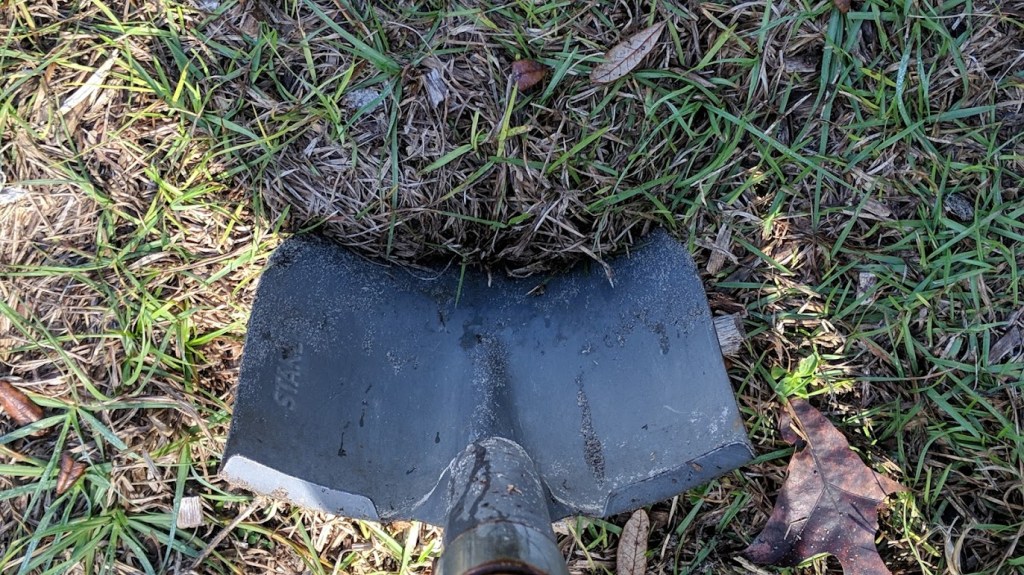
Above is a shot of my attempt to drive our shovel through an area that my husband hasn’t mulched where the shovel barely goes in. The shovel is nicely sharpened, so in theory it should make short work of it.
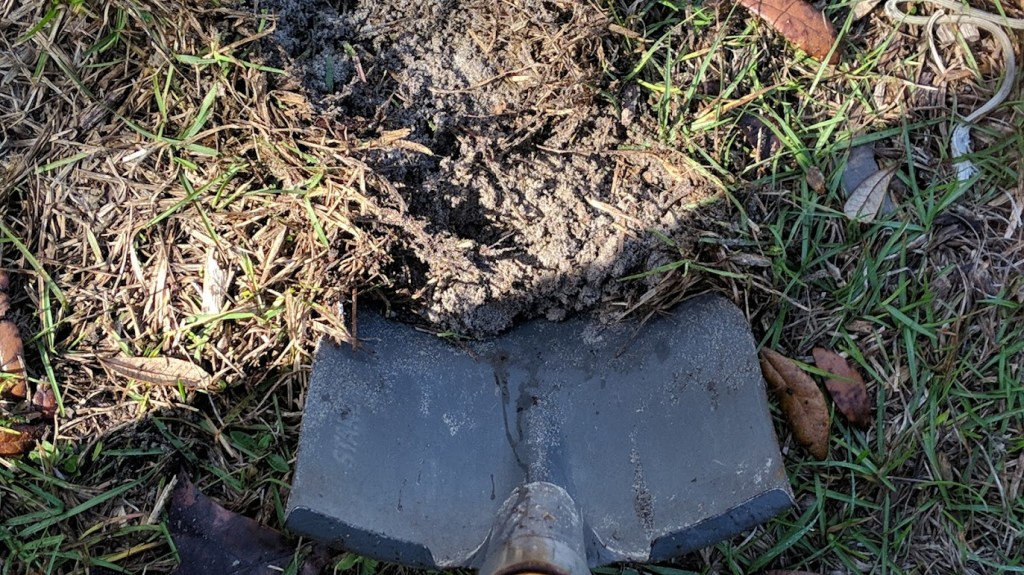
After hacking away at the area where I previously attempted to sink my shovel in, I finally made it through the dirt to expose a small portion of the greyness underneath. Even with the grey dirt exposed, I still couldn’t manage to shove the shovel down to the depth that I managed in the mulched area.
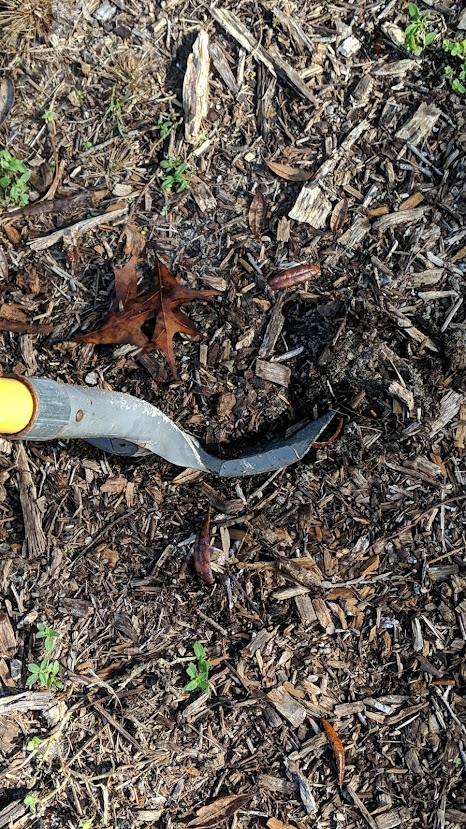
In this shot, you can see where the mulch has decomposed over time and I’m able to sink the shovel into the ground over 3/4 of the way. My husband didn’t heavily mulch the area which is why you still see some weeds that have poked through.
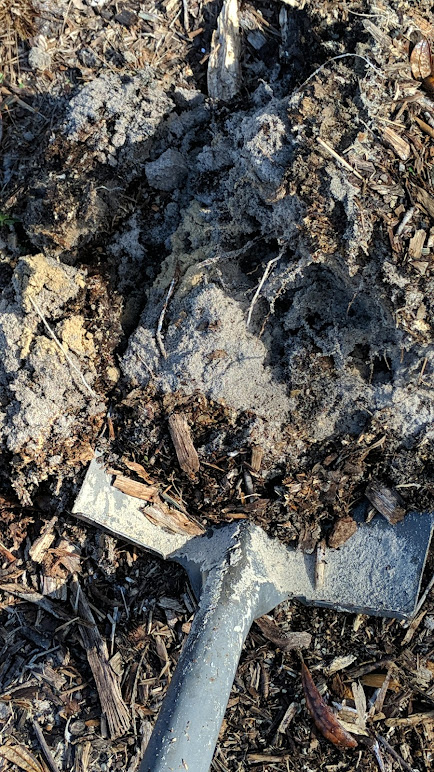
In this shot, you can clearly see that I was able to not only drive the shovel through the grey dirt but go deeper into the ground. If you look closely, you can see an actual layer of broken down mulch on top of the grey dirt and yellow clay. While there are many gardening techniques out there today, Back to Eden seems to be a fairly straight forward and cheaper alternative than some options. I’m currently laying down more thick mulch in both the previously mulched area and the area that didn’t have any with the hope that I’ll be able to show you more soil improvement photos next year.
If you have a local Home Depot or Lowes, you can purchase bagged mulch for a fairly cheap price per bag but the best option if you have it available to you is by signing up for a mulch drop at chipdrop where local arborists will dump a load of mulch at your home address. ChipDrop even has an option to offer money to arborists to drive out to the more rural communities but unfortunately the area where I live currently there just either isn’t any arborists or they aren’t interested in the extra money.
Be sure when starting the process of mulching your plants, to take before and after pictures so you can continually watch for soil improvement. I’ll no doubt have further postings where I rave about the benefits of mulching but wanted to share our progress on our own property for now.
 Suburban & Rural Homesteading Today