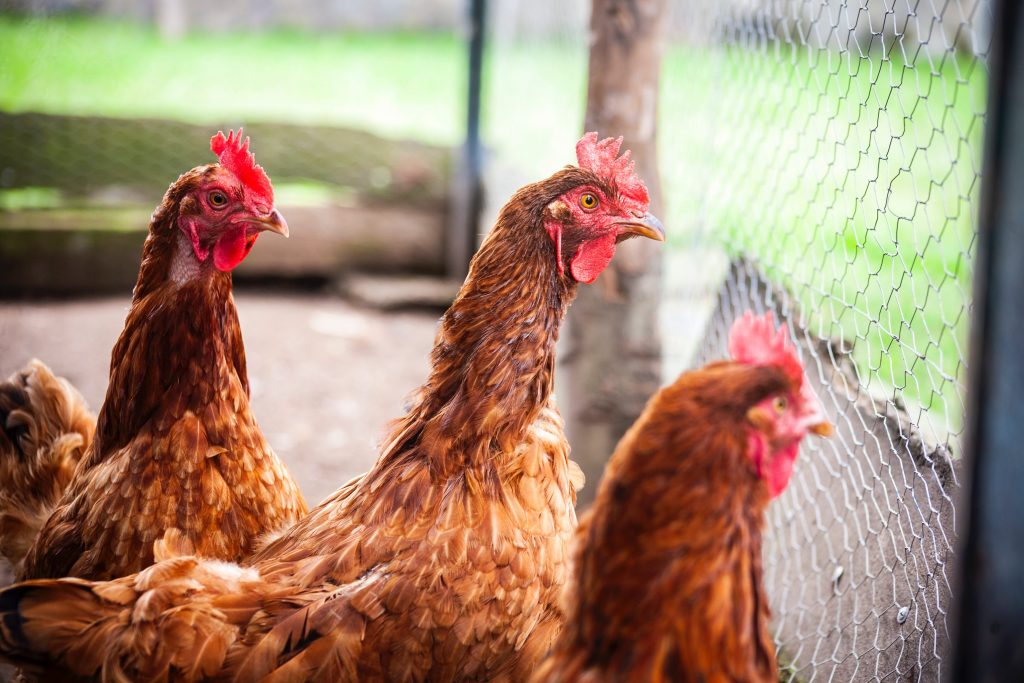
If you are lucky enough to live in a suburban area that doesn’t have an HOA, or neighbors that live right next door, it might be possible to raise meat chickens. While there are laws against killing animals within city limits, I’m fairly sure that if the crap hits the fan you won’t be worrying about rules.
As you look down this list, be sure to learn as much as you can about a specific species before assuming it will do well in your area. A chicken species that might thrive in Florida summers, might not handle Idaho winters.
In addition to educating yourself on each species, you will need to find out what the laws are for keeping egg layers in your backyard homestead. Most counties have laws in place that will allow you to keep around 5-6 hens for egg laying but have outlawed roosters. A roosters natural tendency to crow at the crack of dawn tends to piss off your neighbors and will attract attention from code enforcement.
Those same laws will usually dictate the size and style of the chicken coop that you are allowed to construct and will insist on the coop being located in your back yard. Front and side yard keeping of chickens are usually forbidden. If it’s not forbidden by your country, check your local HOA.
There are numerous online farms that will ship chickens to you through the United States Post Office but the USPS are claiming they are now going to start slowing down deliveries. Most of these companies have a 1-800 number so give them a call ahead of ordering to know what to expect. You can check out ads on craigslist.org for local sellers or contact your nearby Tractor Supply to see if they have any in stock.
Meat Production Chickens –
- Cornish Cross (M:12#, F:8#, Maturity 4-6Wks)
- Jersey Giant (M:13#, F:10#, Maturity 16-21 Wks)
- Bresse (M:7#, F:5#, Maturity 16-20 Wks)
- Orphington (M: 10#, F:8#, Maturity 18-24 Wks)
- Freedom Rangers (M:6#, F:5#, Maturity 9-11 Wks)
Multi-Purpose Chickens – Meat & Eggs
- White (or Brown) Leghorn (M:6#, F:5#, Maturity 16-21 Wks, Egg Prod: 280)
- Turken/Naked Neck (M:8#, F:6#, Maturity 11-18 Wks, Egg Prod: 200)
- Buckeye (M:9#, F:;6.5#, Maturity 16-21 Wks, Egg Prod: 200)
- Chantecler (M:9#, F:7#, Maturity 11-16 Wks, Egg Production: 200)
- New Hampsire Red (M:8#, F:6#, Maturity 8-10 Wks, Egg Prod: 240)
Egg Producing Chickens
- Rhode Island Red (M: 8#, F:6#, Egg Color/Prod: Brown/250
- Plymouth Rock (M:7#, F:6#, Egg Color/Prod: Brown/200)
- Wyandotte (M:8#, F:6#, Egg Color/Prod: Brown/200)
- Orpington (M:13#, F:10#, Egg Color/Prod: Light Brown/150)
- Speckled Sussex (M:9#, F:6#, Egg Color/Prod: Light Brown/250)
- Amerucana/Easter Egger (M:6#, F:5#, Egg Color/Prod: Blue/Green/Light Brown/White/Pink/250)
- Australorp (M:8#, F:5#, Egg Color/Prod: Brown/250)
- Polish (M:6#, F:5#, Egg Color/Prod: White/200)
 Suburban & Rural Homesteading Today