While many individuals who live in rural areas are able to have varies sized ponds dug on their property, the backyard homesteader does not unfortunately have that same ability. Most suburban/urban families live in homes that are situated very compactly together, therefore bringing in a large piece of machinery to dig a pond is near impossible. If one were to live in a suburban location, where houses were not practically stacked on top of one another, you still have to deal with the ugly heads of the HOA rearing at your desire to have a pond.
However, some homes may be able to use manual labor and install a small pond liner or plastic pond form into their front yard but there is usually strict requirements. Never mind the reality, that you can’t raise a decent amount of eating fish in a very small pond without taking the change of them dealing with becoming sick due to over crowding.
One of the many issues plaguing factory farms, even the aquatic variety, is that you can not contain an animal species in tight quarters where there is high concentrations of ammonia and feces without it damaging the animal and environment. Many aquatic farms today not only feed their animals an unnatural diet of what equates to dog kibble, but they are in many cases nothing more than an experiment where man is tryin to out do nature.
In some of these aquatic farms, they raise not only genetically inferior species due to nature not being allowed to weed out the weak, but in some cases the government has allowed genetically modified fish to be raised there. While most of us scratch at our heads at this stupidity, the government continues to allow this dangerous process to take place. In many cases, these aquatic farms around surrounded by nothing more than netting on the side which allows for predator birds to swoop in and grab these fish. It might not be such a huge concern, if it wasn’t for the fact that we do not have data on how genetically modified fish will effect our wild fish stocks.
Lest you assume that I’m some liberal tree hugger, I’m not. This isn’t a one-sided political issue as far as humanity should be concerned. If you value science and nature, then you have to learn to respect that both have boundaries that the government should not be involved in. For these reasons, I always strongly suggest that if you purchase any fish from a store, it should be labeled wild caught. Though as aquatic farms are moved out into the ocean, companies are able to muddle through the terminology of what defines “wild”.
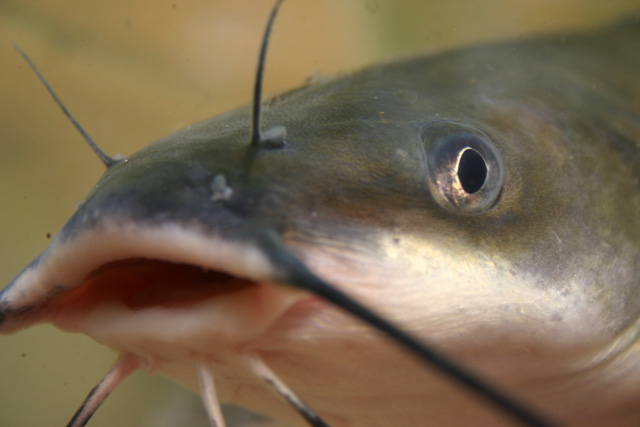
When we consider backyard fish catching, there are generally three species of fish that are most recommended, which are tilapia, channel catfish and bluegill (aka bream). There are numerous videos showing various aquaponic set ups for raising and caring for the tilapia species. However, I would recommend that if you are going to raise any animal, that you would consider raising a species that is actually native to your country.
In the state of Florida, the government decided to release the blue Tilapia variety back in 1960, where it has now grown in immense numbers and spread through out our coastal water ways. Tilapia is not a native species to the United States, it hails from Africa and the Middle East. It’s diet of green algae, diatoms, plankton and small invertebrates put it in direct competition with our native species the largemouth bass. It’s because of these concerns that you should consider not only putting a canopy over your aquatic set up, but a strong netting over any large openings that would allow a predator bird to swoop in.
In creating your backyard aquatic set up, you will need to look at how many gallons your stock tank will hold and find a filter and pump that will be able to aerate the water properly so you do not lose your fish in the beginning. It’s immensely important that you keep the waters oxygen levels stable and the water clean. While you can certainly find numerous articles on raising fish in a barrel, I would recommend some around the size of a IBC tote or larger. You can find videos online showing you how to do an aquaculture set up using many containers and methods.
Prior to introducing your fish, be sure to allow your water to have a few days to adjust. You can search online and find an aquaponics store that should be able to supply you with everything you need for your journey into fish farming. However, if you live in a small town but get deliveries, you can certainly find supplies through stores like Amazon. You’ll need to decide whether you will grow plants in the filtration medium of your choice or put living aquatic plants such as duckweed or water hyacinth. Don’t worry about overgrowth of duckweed or other species as many species of aquatic plants are excellent protein sources for chickens or ducks.
If at all possible, go for the most native fish for your area that are edible, I can’t stress this enough. Fish that are native are more able to adapt to the temperature changes in your area and will be less stressed. While salmon may be a wonderful protein to consume, it is a very finicky fish to care for and the fry can be more expensive than that of native breeds.
With all animal additions to your homestead, make sure you do all the research you can before proceeding with a new project. There are numerous articles and videos on the internet that can help you in your journey.
 Suburban & Rural Homesteading Today